
To use your rollator’s brakes and locks safely, squeeze the brake handles firmly until you hear a click or feel resistance, then test them before sitting or stopping. Engage the locks when you’re stationary or transferring to prevent unwanted movement, ensuring the device stays stable. Regularly inspect and familiarize yourself with how your locks work. For more safety tips and proper techniques, continue exploring this important feature to stay confident and secure during your mobility.
Key Takeaways
- Always test brakes before sitting or stopping to ensure they are fully engaged and secure.
- Engage locking mechanisms when stationary or during transfers to prevent unintended movement.
- Use ergonomic brake handles for easy squeezing, especially if you have limited hand strength.
- Regularly inspect and maintain brake and lock systems for consistent, reliable operation.
- Familiarize yourself with your rollator’s specific locking procedures to ensure safe and correct use.

Brakes and locks are fundamental components that guarantee your safety and security, whether you’re driving a vehicle or securing your property. When using a rollator, understanding how its brakes and locking mechanisms work is essential to ensure safe and effective mobility. One key consideration is that many rollators feature wheelchair compatibility, allowing users to transfer seamlessly between devices or use the rollator as a support aid. This compatibility often influences the design of braking systems and locking mechanisms, making sure they are reliable and easy to operate for a wide range of users, including those with limited hand strength or dexterity.
Understanding rollator brakes and locks ensures safe mobility and easy operation for all users.
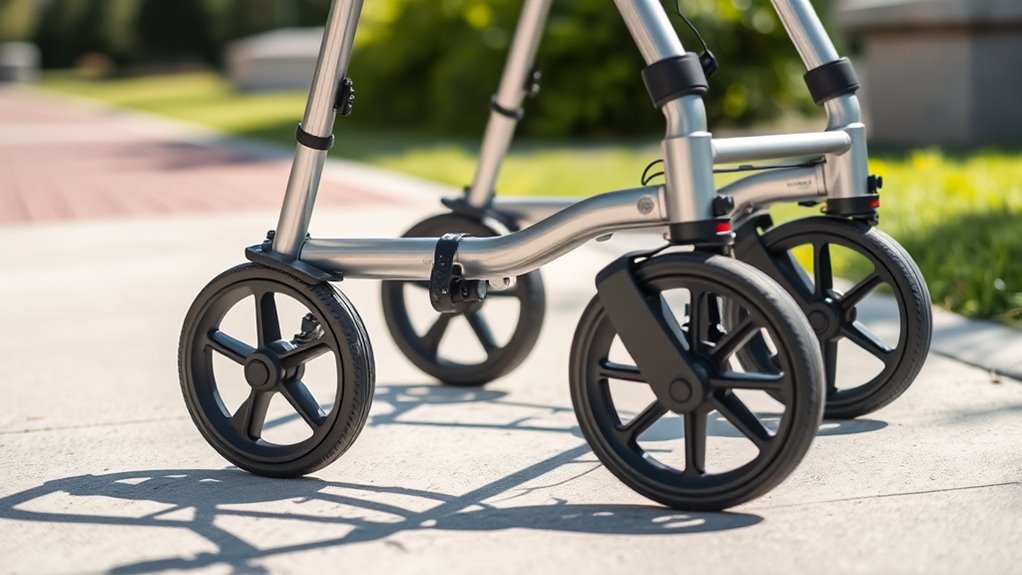
The brakes on your rollator are the primary safety feature that prevents unwanted movement. When you engage the brakes, you activate locking mechanisms that hold the wheels in place, preventing the rollator from rolling away unexpectedly. It’s important to always test the brakes before sitting down or stopping to make certain they are fully engaged. Many models incorporate ergonomic brakes that are easy to squeeze, even for users with arthritis or limited hand strength. Proper use of these brakes involves squeezing the brake handles firmly until you hear a click or feel resistance, signaling the locking mechanism has engaged. This simple step can prevent falls and injuries, especially on inclines or uneven surfaces.
Locking mechanisms in rollators are designed for quick and secure engagement. They typically feature a lever or push-button that activates the lock. When you’re finished using the rollator or need to leave it temporarily, engaging the lock guarantees the device stays stationary. Some locking mechanisms are integrated into the brake handles, making it straightforward to switch from active braking to locking with a single motion. Others may require a separate step, such as flipping a lever or pressing a button. It’s important to familiarize yourself with your specific model’s locking process and to routinely check that the locks function correctly. Regular maintenance and inspection help prevent mechanical failures, which could compromise safety.
If your rollator is wheelchair compatible, you’ll find that the locking mechanisms are designed with versatility in mind. They often accommodate different wheel sizes and configurations, making certain that the brakes operate smoothly regardless of the setup. This compatibility ensures that whether you’re using the device for short-term support or longer walks, the brakes and locks will function reliably. Additionally, proper maintenance and inspection are crucial for ensuring the longevity and safety of the braking system, especially in models designed for diverse configurations. Always make sure that the locking mechanisms are fully engaged before transferring to or from the rollator, and never rely solely on the brakes to secure the device during transfers. Properly functioning brakes and locks are your best assurance of safety, giving you confidence in every step you take.
Frequently Asked Questions
How Often Should I Check the Brake Functionality?
You should check the brake functionality at least once a week to guarantee safety. Regular brake maintenance helps prevent issues, and it’s important to perform lock troubleshooting if you notice any stiffness or slipping. Always test the brakes before each use, especially if the rollator has been unused for a while. Consistent checks keep your rollator safe and reliable, giving you confidence while moving around.
Can I Adjust the Brake Tension for Easier Use?
Did you know that improper brake maintenance can lead to accidents? Yes, you can usually adjust the brake tension for easier use, but it is crucial to follow your rollator’s instructions carefully. To do this, locate the lock mechanism adjustment screw or lever, then gently tighten or loosen it. Always test the brakes afterward to ensure they’re secure and responsive, helping you stay safe while using your rollator.
Are There Different Lock Types for Various Terrains?
Yes, there are different lock types designed for various terrains. Some rollators feature wheel locks that are suitable for smooth indoor surfaces, while others have more robust locks for uneven outdoor terrain. You should choose lock types based on your typical terrain, ensuring better stability and safety. Always check the lock’s design and functionality to match your needs, and remember, proper terrain adaptability enhances your confidence and mobility.
What Should I Do if the Lock Mechanism Jams?
If the lock mechanism jams, first check for debris or dirt that might be causing the issue. Gently clean and lubricate the safety lock features according to the manufacturer’s instructions. If it still doesn’t work, avoid forcing it to prevent damage. Regular lock mechanism maintenance helps prevent jams. If problems persist, contact a professional or the rollator manufacturer for repair or replacement to guarantee your safety.
How Do I Prevent Accidental Unlocking of the Brakes?
Think of your rollator’s brake lock as a delicate dance partner—you want it to hold when needed but not accidentally let go. To prevent accidental releasing, regularly perform brake lock maintenance and guarantee the lock mechanism lubrication stays smooth. Always double-check that the brakes are securely engaged after locking, and avoid sudden movements that might jar the lock loose. Proper care keeps your brakes reliable and your confidence high.
Conclusion
Think of your rollator as a trusty steed—your safety depends on how well you control its brakes and locks. When you master these features, you’re steering through your day with confidence and ease. Always remember to engage the brakes when stopping and lock the wheels when idle. This simple act keeps you secure, like a rider securing their saddle. Stay vigilant, and your rollator will serve you safely on every journey.