
TL;DR

Get comfort and care essentials delivered free — and shop member deals
- Fast, free delivery on millions of items
- Access to Prime Big Deal Days deals on October 6–7
- Prime Video, Amazon Music and more included
A Sixty and Me report describes everyday habits that may support healthier aging after 60, including regular movement, adequate sleep, minimally processed foods and social connection. It draws on research and expert commentary, but the source does not establish that these habits can reverse aging or guarantee a particular health outcome.
A Sixty and Me report on aging after 60 highlights regular movement, sleep, diet and social relationships as everyday factors that may support healthier aging. The article distinguishes chronological age—years lived—from biological measures of how the body functions, while stressing that people cannot control every influence, including their genes.
The report describes smoking, excess sun exposure, chronic stress, poor sleep, inactivity and excess weight as factors associated with faster aging, including changes such as cellular damage, inflammation and muscle loss. It cites Harvard Medical School genetics professor David Sinclair, who estimates that genes may account for up to half of the rate at which people age. The report does not provide the underlying source for that estimate, so it should be understood as an attributed figure rather than a definitive measure for every person.
It also discusses findings linking anxiety about aging with faster epigenetic aging—changes in how genes are switched on and off—in a study of 726 middle-aged women. The report says the association does not mean that occasional worry directly adds years to someone’s age. It also raises possible roles for loneliness, air pollution, frequent alcohol use, disrupted sleep schedules and gut bacteria, though the material does not quantify their effects or establish that each causes faster aging.
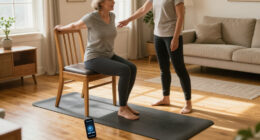
The practical steps it recommends are familiar: maintain a level of physical activity that is safe and sustainable, including walking or strength exercises; keep a consistent sleep routine; eat more vegetables, fruit, beans, whole grains and nuts; and make time for friends, family or community groups. It also points to purpose and a positive outlook as habits associated with healthier aging. These are broad suggestions, not a personalized health plan.
Everyday Habits and Later-Life Health
The report’s relevance lies in its focus on actions that may be accessible without promising that aging can be stopped. For people over 60, maintaining movement, sleep and social contact can be part of supporting day-to-day health and independence. The article frames these practices as repeated choices rather than a single intervention, while recognizing that health outcomes vary and are shaped by factors beyond individual control.
Its distinction between chronological and biological age also gives readers a way to understand why people of the same age can have different health profiles. But biological aging is not presented here as one simple score, and the report does not supply a test or a way to calculate how much any one habit changes a person’s aging process.
As an affiliate, we earn on qualifying purchases.
What the Report Says About Aging
The source is a lifestyle report published by Sixty and Me, not a new clinical guideline or a single newly announced study. It brings together claims about genetics, lifestyle and social factors, and refers to a Harvard study of middle-aged women. The source material provided for this article does not give the study’s publication date, methods, or full citation, limiting how much can be independently assessed from the report alone.
That distinction matters: the report presents a range of associations and recommendations, but the information supplied does not establish that changing one habit will reverse biological aging or prevent disease. Its central message is that some influences may be modifiable, while genes, environment and life circumstances also shape aging.
“Genes may account for up to half of the rate at which we age.”
— David Sinclair, professor of genetics at Harvard Medical School, as quoted in the Sixty and Me report
As an affiliate, we earn on qualifying purchases.
Limits of the Evidence Cited
The supplied report does not include full citations for all the research it discusses, including the study of 726 women, or enough detail to assess how the findings were measured. It also does not establish the size of any effect or show that the suggested habits produce the same results for everyone. Associations between factors such as anxiety, social isolation or sleep and aging should not be read as proof that one directly causes the other.
There is no single promise of a biological-age reduction in the source material, and the report does not define a target amount of exercise, a specific diet, or a timetable for results. People with health conditions or concerns about changes in sleep, movement, weight or mood should seek advice from a qualified health professional rather than treating a general lifestyle article as individual medical guidance.
senior strength training equipment
As an affiliate, we earn on qualifying purchases.
As an affiliate, we earn on qualifying purchases.
Practical Steps, Not a Cure
The report does not announce a new study, policy or formal follow-up, so no next research milestone is specified. Its proposed next step for readers is to choose manageable habits—such as taking a regular walk, keeping a steady bedtime or contacting someone they care about—and build them into daily life.
Whether a particular change is appropriate depends on a person’s circumstances and health. The broader question for readers is not how to stop aging, but which sustainable choices may support their well-being now. Further evaluation of the research claims would require the original studies and their methods, which are not included in the source material.
As an affiliate, we earn on qualifying purchases.
Key Questions
What does biological age mean in the report?
The report uses biological age to describe how well the body is functioning, in contrast with chronological age, which counts years lived. It does not provide a single measurement method or a personal score.
Which habits does the report suggest after 60?
It recommends sustainable physical activity, regular sleep, a diet centered on minimally processed foods, staying socially connected and maintaining a sense of purpose. These are general suggestions, not guarantees of a particular outcome.
Does worrying about aging make someone age faster?
The report cites an association between greater anxiety about aging and faster epigenetic aging in a study of 726 middle-aged women. It says this does not show that an occasional worry directly adds years or establish cause and effect.
Can lifestyle changes reverse aging?
The source does not show that lifestyle changes reverse aging. It says some factors may be influenced by daily habits, while genetics and other circumstances remain beyond a person’s control.
Source: rss
Fall Picks
fall essentials
As an affiliate, we earn on qualifying purchases.