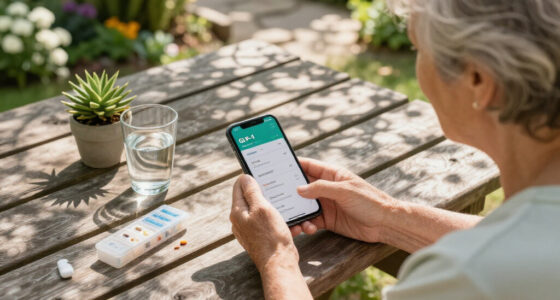
For seniors, a normal blood pressure is generally below 130/80 mm Hg, but it’s important to stay alert for higher readings. If your numbers consistently rise above 140/90 mm Hg, you may be at risk of hypertension, which needs management to prevent complications. A spike above 180/120 mm Hg is a hypertensive crisis requiring immediate care. Keep an eye on these numbers and explore further to learn how to protect your health effectively.

Turn quiet afternoons into listening time
- Thousands of audiobooks, podcasts and originals
- Listen on your phone, tablet or Echo — also offline
- Cancel anytime
Key Takeaways
- Normal blood pressure for seniors is generally below 130/80 mm Hg, but individual targets may vary based on health conditions.
- Elevated readings are between 130-139/80-89 mm Hg, requiring lifestyle changes and monitoring.
- Hypertensive crisis (>180/120 mm Hg) demands immediate medical attention to prevent serious complications.
- Low blood pressure (<90/60 mm Hg) can cause dizziness and falls, especially risky for seniors.
- Regular blood pressure checks and tracking help detect abnormal levels early and guide effective management.
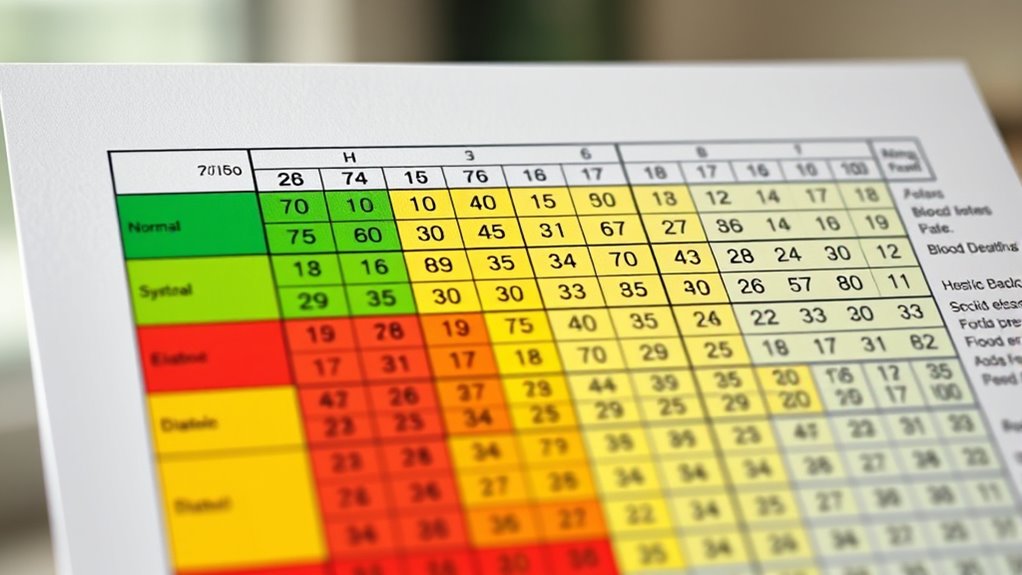
A blood pressure chart is a helpful tool that allows you to quickly understand your blood pressure readings and what they mean for your health. As you get older, maintaining awareness of your blood pressure becomes even more important, especially since seniors are more prone to hypertension. Understanding where your numbers fall on the chart can guide you in managing your health effectively and taking the right steps if your readings are outside the normal range.
When you look at your blood pressure readings, you’ll see two numbers: systolic and diastolic. The systolic number measures the pressure in your arteries when your heart beats, while the diastolic measures the pressure when your heart rests between beats. Normal blood pressure is generally considered to be below 120/80 mm Hg. If your readings are consistently higher, it indicates elevated blood pressure, and this is where hypertension management comes into play. Managing high blood pressure isn’t just about avoiding a diagnosis; it’s about reducing your risk for heart disease, stroke, and other health issues. Lifestyle modifications—like eating a low-sodium diet, exercising regularly, and reducing alcohol intake—are often the first steps. However, if these aren’t enough, your doctor may recommend blood pressure medications to keep your numbers in check. These medications can be crucial for controlling hypertension, especially in seniors, who may have additional health considerations.
It’s equally important to recognize when your blood pressure readings are dangerously high or low. Readings above 180/120 mm Hg are considered hypertensive crises and require immediate medical attention. On the other hand, too low blood pressure, or hypotension, can cause dizziness, fainting, and increase the risk of falls—especially concerning for seniors. Regular monitoring using a blood pressure chart helps you catch these extremes early and seek appropriate care. Additionally, understanding the philosophical insights behind health data can motivate more mindful health decisions.
digital blood pressure monitor for seniors
As an affiliate, we earn on qualifying purchases.
As an affiliate, we earn on qualifying purchases.
Frequently Asked Questions
How Does Blood Pressure Change With Age?
As you age, your blood pressure tends to rise because blood vessel elasticity decreases and arterial stiffness increases. This means your arteries become less flexible, making it harder for blood to flow smoothly and causing higher readings. You might notice your blood pressure gradually climbing over time. Staying active, eating healthily, and monitoring your blood pressure regularly can help manage these changes and reduce your risk of complications.
Are There Specific Blood Pressure Targets for Seniors?
Yes, there are specific blood pressure targets for seniors. Typically, your doctor aims for a systolic pressure below 130-140 mm Hg and a diastolic around 70-80 mm Hg, but these can fluctuate based on your health. To manage hypertension effectively, your doctor may recommend blood pressure medications and lifestyle changes. Regular checkups help guarantee your targets are met, reducing the risk of complications like heart disease or stroke.
Can Lifestyle Modifications Lower High Blood Pressure?
Ever wonder if you can lower high blood pressure naturally? You absolutely can through lifestyle modifications like diet adjustments and stress management. Eating foods low in salt and rich in fruits, vegetables, and whole grains helps. Managing stress with relaxation techniques or exercise also makes a difference. Are you ready to take control? These simple changes can considerably improve your blood pressure and overall heart health, making a real difference in your life.
What Medications Are Commonly Prescribed for Seniors?
You’re likely prescribed medications like diuretics, ACE inhibitors, or beta-blockers to manage blood pressure. Be aware that these drugs can have side effects such as dizziness or fatigue, and they may interact with other medications you take. Always communicate openly with your doctor about any side effects or potential drug interactions, so they can adjust your treatment plan to keep you safe and comfortable.
How Often Should Seniors Monitor Their Blood Pressure?
Imagine you’re back in the days of rotary phones; today, you should monitor your blood pressure regularly using home monitoring with digital devices. For seniors, checking it once or twice a week is usually enough, but if you have health issues, your doctor might suggest more frequent checks. Always follow your healthcare provider’s advice, and keep a log to track any changes or concerns.
automatic blood pressure cuff for elderly
As an affiliate, we earn on qualifying purchases.
As an affiliate, we earn on qualifying purchases.
Conclusion
Knowing your blood pressure readings helps you stay on top of your health, especially as you age. Did you know that nearly 70% of seniors have high blood pressure? Staying within the recommended range can markedly lower your risk of heart disease and stroke. Keep an eye on your numbers, make healthy choices, and don’t hesitate to talk to your doctor if your readings concern you. Your heart’s health is worth the effort—stay informed and proactive!
home blood pressure monitor with large display
As an affiliate, we earn on qualifying purchases.
As an affiliate, we earn on qualifying purchases.
blood pressure tracking device for seniors
As an affiliate, we earn on qualifying purchases.
As an affiliate, we earn on qualifying purchases.
Fall Picks
fall essentials
As an affiliate, we earn on qualifying purchases.