TL;DR

Turn quiet afternoons into listening time
- Thousands of audiobooks, podcasts and originals
- Listen on your phone, tablet or Echo — also offline
- Cancel anytime
A Fit&Well writer’s 30-day trial of weighted vests ended with swollen knees and a fitness plateau after the writer increased load, running distance and speed together. The report, citing fitness instructor Holly Haywood, recommends starting light, avoiding long runs, using a vest for controlled bodyweight exercises and changing only one training variable at a time. The trial does not establish that weighted vests preserve muscle or bone density.
A Fit&Well writer’s 30-day test of weighted vests ended with swollen knees and a fitness plateau after the writer combined added weight with longer, faster or more frequent runs. The report does not test whether vests preserve muscle or bone density; instead, it recounts one person’s experience and sets out four training precautions with guidance from fitness instructor Holly Haywood.
The writer tested a 6-pound G-Vest Run and a 10-pound G-Vest Icon, both from U.S. brand OMORPHO, while training for a marathon. The writer says they used a vest across workouts for 30 days and increased more than one aspect of training at once, including running distance, speed or frequency. They reported swollen knees and a fitness plateau, and said a 14-mile run ended at 12.5 miles.
The first recommendation is to start with a light load and increase gradually. Haywood, lead instructor at London health club chain Third Space, suggests a starting load of no more than 5% of body weight for general use. The writer says runners may want to begin lower, around 1% to 2% of body weight, and advises increases of no more than 2 pounds at a time. These are recommendations in the report, not findings from a clinical trial.
The other recommendations are to avoid wearing a vest on long runs, use it for controlled bodyweight exercises only after establishing sound movement patterns, and change just one training variable at a time. Haywood suggests trying a 15- to 20-minute brisk treadmill walk before progressing. If that feels comfortable, the report recommends increasing either incline or speed, rather than raising the load, duration and pace together.
Reducing Risk When Adding Load
Weighted vests add external load to movement, which can make an exercise feel harder without adding repetitions. That may appeal to people seeking to increase resistance during workouts, but the report’s central message is that the extra load also changes the demands on the body. A vest does not make every activity safer or more effective simply because it raises effort.
For readers, the practical relevance is the distinction between adding weight and managing training volume. Combining a heavier vest with more distance, speed or sessions makes it difficult to identify what is causing discomfort. Haywood says an overly heavy or incorrectly worn vest can strain joints, including the knees, hips and ankles, and may affect form. The writer’s experience illustrates that risk, but it is an individual account rather than evidence that weighted vests generally cause injury.
The headline claim about preserving muscle and bone density needs similar care. The supplied report discusses load-bearing exercise as a potential way to address age-related muscle loss and bone weakening, but it does not present measurements of muscle or bone changes, or a controlled comparison of vest users and non-users. No preservation effect is established by this 30-day test.
As an affiliate, we earn on qualifying purchases.
Inside the 30-Day Vest Test
Weighted vests have drawn attention from athletes and social media personalities, according to the Fit&Well report. The writer’s test was not designed as a scientific study: it was a personal experiment carried out while marathon training, and the writer says the approach did not account for the need to increase training demands gradually.
The writer initially used the vests across different workouts, including running. They later shifted to bodyweight movements such as push-ups, dips and pull-ups while allowing their knees time to recover. The writer found the close-fitting vest useful during those movements because it did not interfere with the exercises, but that product assessment is also based on personal experience.
Haywood’s guidance focuses on gradual progression and maintaining technique. For a treadmill walk, she recommends beginning with a short, brisk session and increasing effort incrementally. The report does not provide a broader research review, a follow-up on the writer’s knee symptoms or evidence that its suggested percentages suit every person.
“The general recommendation, like with most resistance training, is to start light and gradually build up as strength and comfort with the vest improve.”
— Holly Haywood, lead instructor at Third Space, as quoted by Fit&Well
adjustable weighted vest for running
As an affiliate, we earn on qualifying purchases.
As an affiliate, we earn on qualifying purchases.
What the Trial Cannot Establish
The account does not establish whether weighted vests preserve muscle mass or bone density. The writer reports a month of use but gives no measurements of either outcome, and the report does not describe a controlled study. Its health framing should not be read as proof of a specific benefit.
It is also unclear how much the vest contributed to the writer’s swollen knees. The writer was training for a marathon and increased multiple training variables, so the account cannot isolate the effect of the vest from running volume, pace or other factors. The report does not say how long the swelling lasted, whether the writer sought medical care, or what happened after the test.
The suggested starting percentages and progression steps are attributed guidance, not a universal prescription. Individual suitability may depend on health, experience and activity. People with concerns about pain or whether loaded exercise is appropriate can seek advice from a qualified health professional or fitness professional.
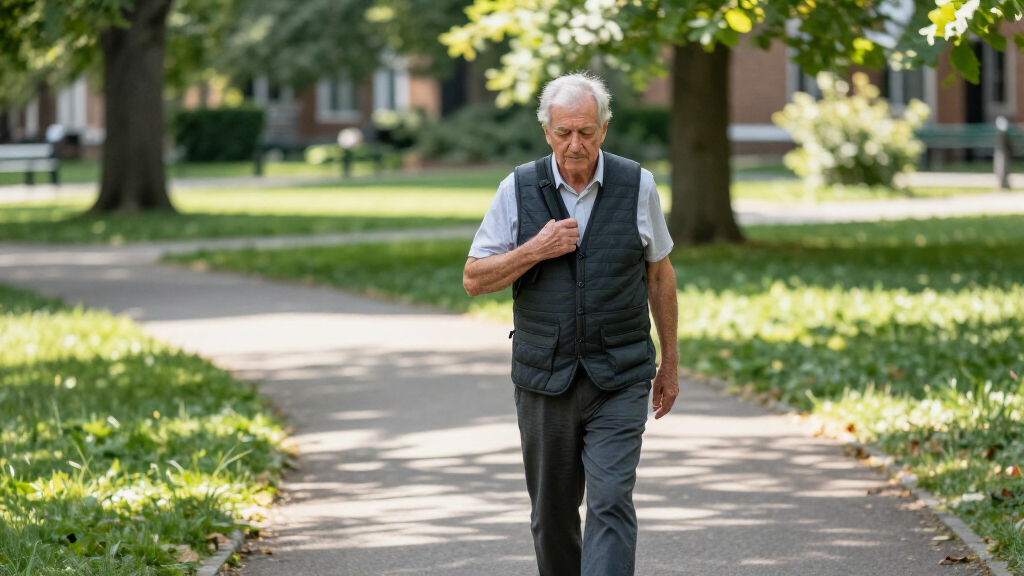
lightweight weighted vest for seniors
As an affiliate, we earn on qualifying purchases.
As an affiliate, we earn on qualifying purchases.
A Gradual Return to Vest Training
The report does not announce a new study or a planned follow-up. Its practical next step is for anyone trying a weighted vest to begin with a short, light session, keep technique steady and monitor how the body responds. Haywood’s example is a brisk treadmill walk lasting 15 to 20 minutes, followed by a small increase in incline or speed only if the session feels comfortable.
For runners, the writer recommends avoiding long runs with a vest and changing only one factor at a time. The report also advises reducing the load or taking the vest off if joint discomfort develops. Whether the writer’s symptoms resolved, and whether the trial will be followed by longer-term or measured outcomes, are not stated.
weighted vest for bodyweight exercises
As an affiliate, we earn on qualifying purchases.
As an affiliate, we earn on qualifying purchases.
Key Questions
Did the report prove weighted vests preserve muscle or bone density?
No. The Fit&Well piece describes a 30-day personal test and does not report measurements of muscle mass or bone density or compare results with a control group.
What starting weight does the report suggest?
Haywood suggests no more than 5% of body weight for a general starting point. The writer says runners may want to start at 1% to 2%. These are recommendations in the report, not a single rule proven suitable for everyone.
Should people wear weighted vests on long runs?
The writer advises against it after experiencing swollen knees during marathon training. Haywood says excess or incorrectly worn load can strain joints and affect form. The report is an individual account, not a controlled test of long-distance running with vests.
How should someone increase the challenge?
The report recommends starting with a light load, keeping technique sound and changing one training variable at a time. Haywood’s example begins with a 15- to 20-minute brisk walk before a small increase in incline or speed.
Source: rss
Halloween Picks
halloween
As an affiliate, we earn on qualifying purchases.