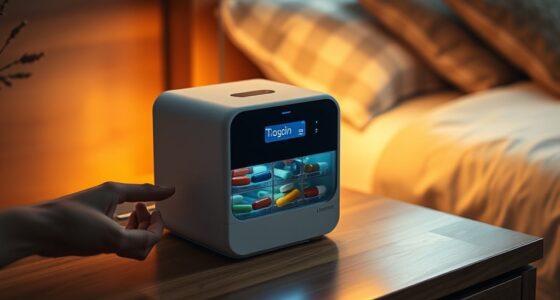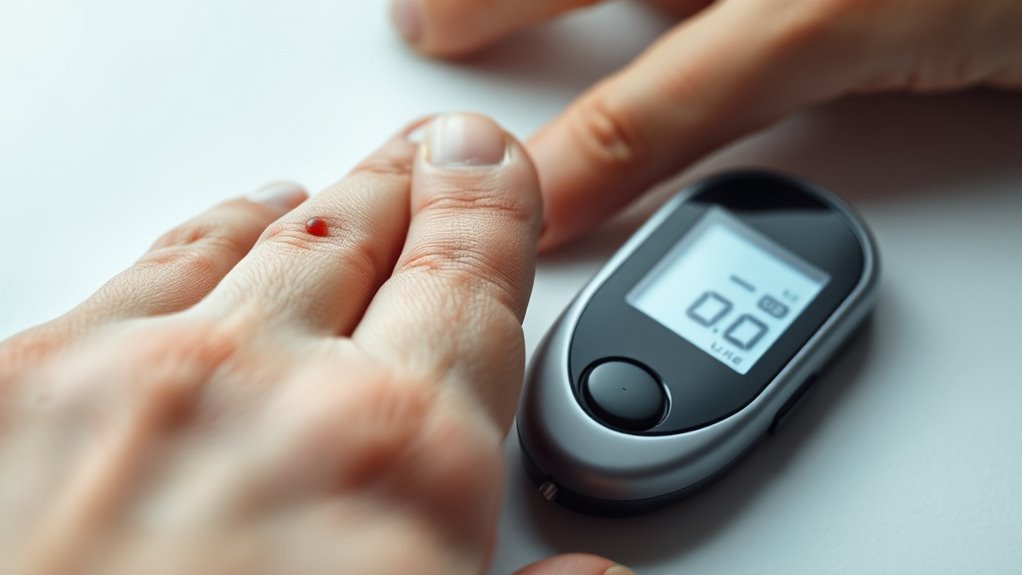

To use glucose meters safely, wash your hands thoroughly before testing to avoid contamination, and follow the manufacturer’s instructions carefully. Store test strips and lancets in a cool, dry place and check their expiration dates regularly. Use a consistent testing routine, including testing at different times like fasting and post-meal, and record your results accurately. Proper technique and maintenance help *guarantee* reliable results—keep going to learn more essential tips for safe blood sugar monitoring.
Key Takeaways
- Always wash hands thoroughly before testing to prevent contamination and ensure accurate readings.
- Follow the manufacturer’s instructions for proper use and calibration of your glucose meter.
- Use a new, sterile lancet for each test to reduce infection risk and minimize tissue damage.
- Store test strips and lancets in a cool, dry place and check expiration dates regularly.
- Log your blood sugar readings along with relevant details like food and activity to identify patterns and maintain safety.
Monitoring your blood sugar levels is fundamental for managing diabetes and maintaining overall health. By regularly checking your blood glucose, you get essential information that helps you make informed decisions about insulin adjustment and lifestyle choices. Proper use of a glucose meter enables you to track how your body responds to different foods, activities, and medication, empowering you to stay in your target range and avoid complications. Understanding the relationship between your diet and blood sugar levels is critical; the dietary impact can cause fluctuations that require you to adjust your insulin doses accordingly. For instance, high-carbohydrate meals may lead to spikes, prompting you to modify your insulin intake to prevent hyperglycemia. Conversely, low-carb meals might require less insulin to keep your blood sugar stable. Accurately monitoring these changes helps you fine-tune your treatment plan and maintain better control over your condition.
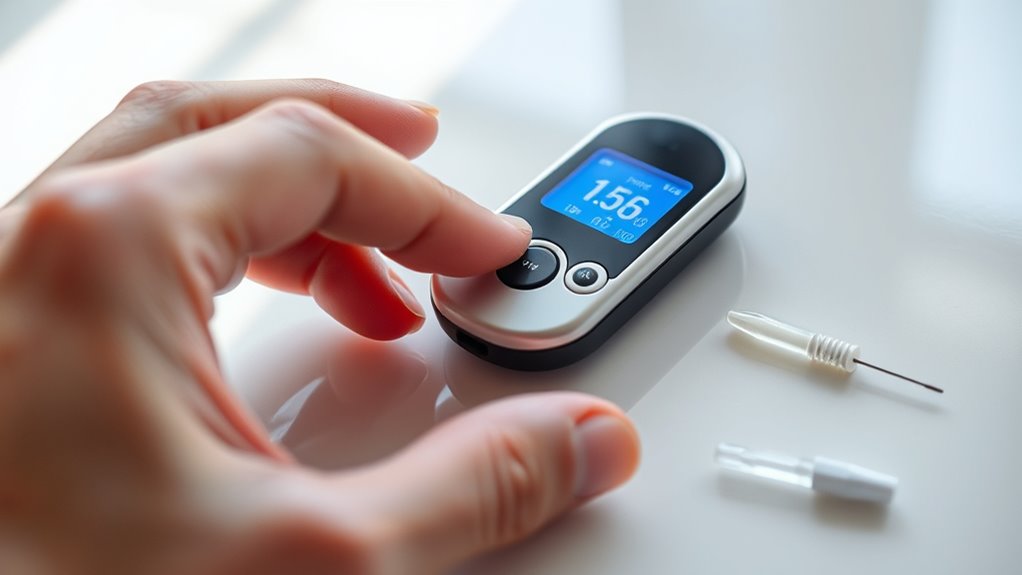
When using a glucose meter, it’s important to follow a consistent routine**. Wash your hands thoroughly before testing to prevent contamination that could skew your results. Use the lancet device to prick your finger, and ensure you don’t press too hard to avoid tissue damage. Collect enough blood to fill the test strip adequately, then insert it into your meter. Modern devices provide quick readings, typically within seconds, but always double-check that you’re following the manufacturer’s instructions for your specific model. Regular calibration and maintenance of your meter ensure consistent results, which are critical for making accurate insulin adjustments. Keep your test strips and lancets stored in a cool, dry place to prevent degradation, and check expiration dates regularly. Additionally, choosing a high-quality glucose meter** can improve the accuracy and reliability of your readings, supporting better diabetes management.
It’s also essential to record your blood sugar readings consistently. Use a logbook or digital app to track patterns over days and weeks, noting what you ate, your activity levels, and insulin doses at the time. This record helps your healthcare provider identify trends and recommend necessary insulin adjustments. Remember, testing should be done at different times of the day—fasting, before meals, after meals, and at bedtime—to get a complete picture of your glucose control. This routine highlights how specific foods or activities impact your blood sugar, guiding dietary adjustments that support stable levels. Always carry your testing supplies with you, especially when eating out or traveling, so you can check your levels whenever needed.
Frequently Asked Questions
How Often Should I Calibrate My Glucose Meter?
You should calibrate your glucose meter as recommended by the manufacturer, usually once a month or whenever you notice inconsistent readings. Regular meter calibration helps ensure test strip accuracy, which is essential for reliable blood sugar monitoring. Always follow your device’s instructions and use control solutions to verify the meter’s accuracy. If your readings seem off, recalibrate sooner to maintain precise results and manage your blood sugar effectively.
Can I Use Expired Test Strips Safely?
You shouldn’t use expired test strips because their accuracy can be compromised, leading to unreliable blood sugar readings. Always check the expiration date before using, and store strips in their original container, away from heat, moisture, and direct sunlight. Proper strip storage conditions help maintain their effectiveness. If strips are expired or stored improperly, you risk inaccurate results, which could affect your diabetes management and health decisions.
Is It Safe to Share My Glucose Meter With Others?
You shouldn’t share your glucose meter with others because sharing devices can transfer germs and infections. Always practice good hygiene by cleaning your meter and lancing device regularly, especially if you share them with someone else. Using your own device reduces the risk of cross-contamination and ensures accurate readings. Keep your meter clean, store it properly, and avoid sharing to stay safe and healthy.
What Should I Do if My Meter Gives Inconsistent Readings?
If your meter gives inconsistent readings, start by troubleshooting it—check the test strips, verify it’s calibrated correctly, and follow the manufacturer’s instructions. Re-test your blood sugar to confirm the readings, and compare results with a control solution if available. If discrepancies persist, consult your healthcare provider. Accurate dosing depends on reliable readings, so addressing meter issues promptly helps you manage your blood sugar effectively and safely.
Are There Specific Storage Conditions for Blood Glucose Test Strips?
Yes, proper test strip storage is essential. Keep your blood glucose test strips in their original container, tightly closed, and avoid exposing them to extreme temperature requirements. Store them at room temperature, ideally between 59°F and 86°F (15°C to 30°C). Avoid humidity, heat, and direct sunlight, as these can damage the strips and affect your readings. Always check the expiration date before use to guarantee accuracy.
Conclusion
By following these tips, you can guarantee safe and accurate blood sugar monitoring every time. Remember to keep your glucose meter clean, use proper technique, and store supplies correctly. Isn’t your health worth the extra effort? Staying vigilant helps you manage your condition effectively and prevents complications. So, take control today—your well-being depends on the steps you take now. Are you ready to make blood sugar monitoring a confident, routine part of your health journey?