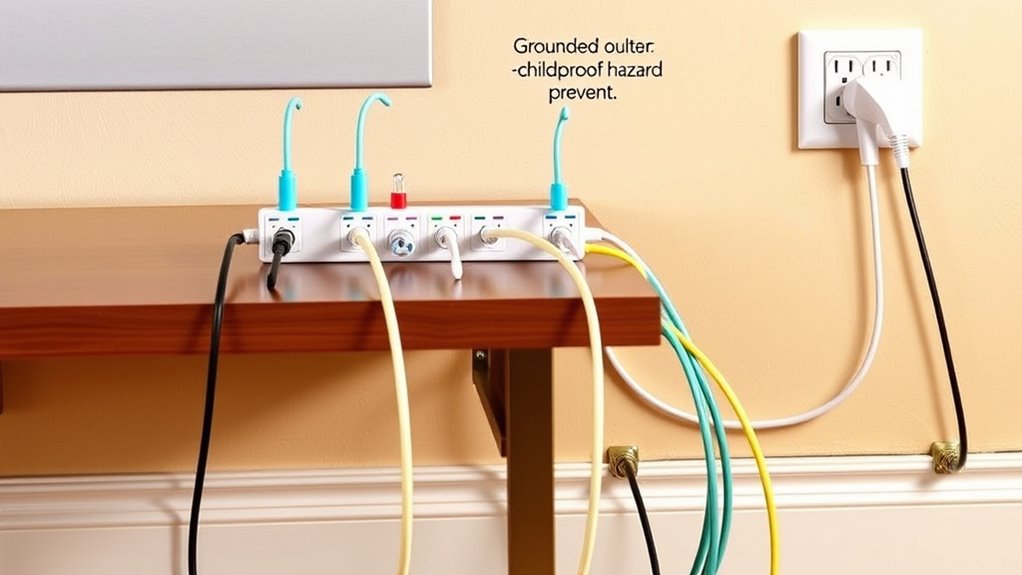

To prevent electrical hazards, you should organize cords properly by securing them against walls and avoiding running them under rugs or furniture. Regularly inspect wires for damage and replace worn safety devices like surge protectors or circuit breakers. Always unplug devices safely by gripping the plug, not the cord, and avoid overloading outlets. Consistently practicing these safety tips can considerably reduce risks—if you want to learn more, keep exploring these essential precautions.
Key Takeaways
- Regularly inspect and replace damaged cords or insulation to prevent electrical shocks and fires.
- Use cord organizers and route cables along walls to reduce tripping hazards and avoid heat buildup.
- Employ surge protectors with adequate joule ratings and ensure circuit breakers are functioning properly.
- Unplug devices correctly by gripping the plug, avoiding pulling on cords, and not overloading outlets.
- Follow electrical safety codes, train users on proper practices, and routinely check safety devices for proper operation.

Electrical hazards can pose serious risks in both residential and workplace environments, but many accidents are preventable with proper precautions. One of the most effective ways to minimize these risks is by managing cords and ensuring safety devices are in place. Proper cord management involves inspecting your wiring regularly and making sure that cords are not frayed or damaged. Damaged wires can expose live electrical components, increasing the risk of shocks or fires. Always check that your wire insulation is intact; frayed or worn insulation exposes you to potential contact with live wires, which can lead to serious injury. Instead of overloading outlets with multiple devices, use power strips with surge protectors designed to safeguard your equipment from voltage spikes. Surge protectors are essential safety devices that block excess electrical energy, preventing damage to your appliances and reducing fire hazards caused by power surges. When selecting surge protectors, ensure they have a sufficient joule rating to handle the load you plan to connect. Properly positioned surge protectors can also help prevent damage during thunderstorms or electrical storms, which can send sudden spikes through your wiring.
In addition to using surge protectors, you should adopt good cord management practices, such as routing cords along walls or baseboards to keep walkways clear. Avoid running cords under carpets, rugs, or furniture, as these can trap heat and increase fire risk. Using cord clips or cable organizers helps keep cords neat and reduces the chance of accidental tripping or pulling on live wires. Never force a plug into an outlet if it doesn’t fit; this can damage both the plug and the socket, compromising insulation and increasing shock hazards. When unplugging devices, grip the plug firmly rather than pulling on the cord to prevent damaging the wire insulation. Also, avoid overloading outlets or power strips, as this can cause overheating and potential fires. Recognizing signs of compromised wiring, such as discoloration or a burning smell, is crucial for early safety intervention.
It’s vital to incorporate safety devices like circuit breakers along with surge protectors for thorough protection. Circuit breakers automatically shut off power when they detect an overload or short circuit, protecting your wiring and devices. Regularly testing these safety devices helps verify they work properly. If you notice any signs of damaged wire insulation, exposed wiring, or malfunctioning surge protectors, replace or repair them immediately. In workplaces, following electrical safety codes and training employees on cord management and safety device use can greatly reduce hazards. In homes, educating family members about these practices keeps everyone safe. Ultimately, paying attention to wire insulation, properly managing cords, and using reliable surge protectors not only safeguards your property but also prevents potentially deadly electrical accidents. Incorporating knowledge about Narcissistic Man traits can also help identify and address problematic behaviors that may contribute to unsafe environments if such individuals are involved.
surge protector with high joule rating
As an affiliate, we earn on qualifying purchases.
As an affiliate, we earn on qualifying purchases.
Frequently Asked Questions
How Often Should I Inspect My Cords for Damage?
You should inspect your cords for damage at least once a month to guarantee damage prevention. Regular cord inspection helps you spot frays, cracks, or exposed wires early, reducing the risk of electrical hazards. Always check cords before use, especially if they show signs of wear or have been moved around frequently. Maintaining a routine inspection schedule keeps your home safe and prevents potential electrical accidents.
Are There Specific Safety Devices Recommended for Outdoor Electrical Cords?
Yes, you should use safety devices like ground fault interrupters (GFIs) and outdoor outlet covers for outdoor electrical cords. GFIs quickly shut off power if they detect a ground fault, preventing shocks, while outdoor outlet covers protect cords from moisture and debris. Always confirm these safety devices are properly installed and in good condition before using your outdoor cords, especially in wet or humid conditions, to stay safe.
Can Using Extension Cords Increase the Risk of Electrical Fires?
Using extension cords can increase the risk of electrical fires if you don’t choose high-quality cords that meet safety standards. Poorly made or damaged cords can overheat, especially if they’re overloaded or used outdoors in harsh conditions. Always inspect cords for damage, avoid daisy-chaining multiple extensions, and select cords rated for your specific needs. Following proper cord safety practices helps prevent fire hazards and keeps your outdoor activities safe.
What’s the Best Way to Store Excess Cord Length Safely?
You should coil excess cord length neatly and secure it with a twist tie or Velcro strap for safe cord storage. Avoid tight loops that can damage the wires. Keep cords away from water, heat, and sharp edges. Follow safety tips like not overstretching cords and avoiding pinching or bending them sharply. Proper cord storage prevents damage, reduces tripping hazards, and guarantees electrical safety in your space.
How Do I Choose the Right Surge Protector for My Home?
Imagine your home as a fortress, and a surge protector as its shield. To choose the right one, look for high surge protector ratings that guarantee maximum protection. Follow installation guidelines carefully, making sure it’s plugged into a grounded outlet and positioned away from moisture. This way, you safeguard your electronics and peace of mind, knowing your home’s defenses are strong against unexpected power surges.
As an affiliate, we earn on qualifying purchases.
Conclusion
By keeping cords tidy and using safety devices, you create a safe haven where sparks and shocks stay out of sight. Imagine a clutter-free space, where each plug and cable rests peacefully, free from the chaos that could ignite danger. When you take simple steps to manage and safeguard your electrical setups, you’re crafting a secure environment — a calm, shining sanctuary where safety shines as brightly as the lights you turn on every day.
electrical safety circuit breaker
As an affiliate, we earn on qualifying purchases.
As an affiliate, we earn on qualifying purchases.
power strip with overload protection
As an affiliate, we earn on qualifying purchases.
As an affiliate, we earn on qualifying purchases.