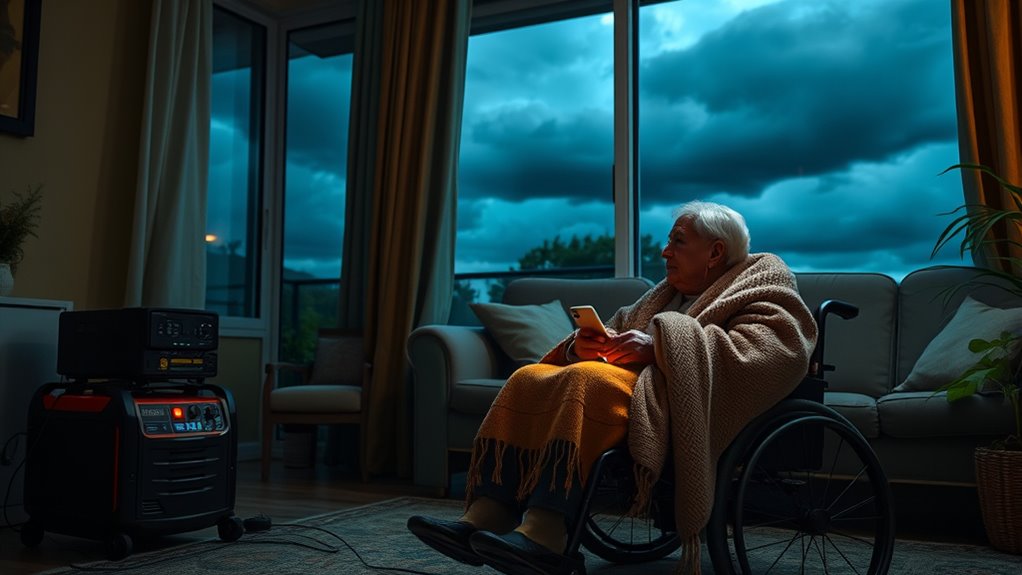

During weather emergencies, having reliable backup power is crucial to keep your essential medical devices and safety systems running. Generators and solar options can provide continuity if the power goes out, ensuring you stay connected and safe. Portable solar chargers or solar-powered generators are eco-friendly choices that minimize noise and maintenance. Proper planning, including emergency kits and communication plans, can make a big difference. Discover more ways to fully prepare and protect yourself during storms and outages.
Key Takeaways
- Reliable backup power, such as solar generators or standby generators, ensures essential medical devices remain operational during weather-related outages.
- Portable solar chargers and solar-powered generators offer eco-friendly, quiet alternatives to fuel-based generators for seniors.
- Emergency kits with batteries, medical supplies, and communication devices are vital for maintaining safety during power outages.
- Regular testing and maintenance of backup systems are crucial to ensure they function properly when needed.
- Developing a communication plan and informing loved ones about backup power setups enhances safety and preparedness during severe weather.

During weather emergencies like hurricanes, snowstorms, or heatwaves, seniors are particularly vulnerable to power outages that can disrupt essential medical devices and safety systems. Losing power can be dangerous, especially if you rely on life-sustaining equipment like oxygen machines, CPAP devices, or refrigerated medications. That’s why having a backup power plan is vital. One effective solution is to contemplate solar energy options, such as portable solar chargers or solar-powered generators. These devices can provide clean, renewable power during outages, reducing dependence on traditional fuel-powered generators that may be noisy or hard to operate. Solar energy systems are quiet, eco-friendly, and require minimal maintenance, making them ideal for seniors who want reliable backup power without added hassle.
Solar-powered generators offer quiet, eco-friendly backup power during weather emergencies for seniors.
In addition to solar options, assembling a complete emergency kit is indispensable. Your emergency kit should include essential supplies like bottled water, non-perishable food, batteries, flashlights, and a portable phone charger. Make sure your emergency kit also contains spare medical supplies and any medications you might need. Keep these items in an accessible location, so you can grab them quickly if power is lost unexpectedly. It’s also wise to include a battery-powered or crank radio to stay updated on weather alerts and official instructions during emergencies.
Planning ahead for backup power involves more than just having equipment on hand. You should also create a communication plan with family, friends, or neighbors who can check on you if severe weather strikes. Inform them about your medical needs and your backup power setup, so they know how to assist if necessary. Additionally, consider installing a standby generator that can automatically activate if the power goes out, especially if you have critical medical devices that require continuous power. Regular maintenance and testing of your backup systems guarantee they will operate properly when needed.
Finally, educate yourself on how to safely operate your solar-powered devices and backup generators. Proper knowledge prevents accidents and ensures you can maximize your backup power during emergencies. By combining solar energy solutions with a well-stocked emergency kit and a solid communication plan, you can markedly reduce the risks associated with power outages during bad weather. This preparation helps protect your health, safety, and independence when the weather turns severe, giving you peace of mind during challenging times.
Frequently Asked Questions
How Do I Maintain My Backup Generator During the Off-Season?
To maintain your backup generator during the off-season, you should regularly check and top off your fuel storage to prevent stale fuel and condensation. Additionally, verify battery maintenance by charging the battery and inspecting for corrosion or leaks. Run the generator periodically to keep it in good working order. These steps help prevent issues and ensure your generator’s reliability when you need it most.
What Are the Signs My Backup Power System Needs Repair?
Your backup power system speaks through subtle signs—struggling starts, strange noises, or inconsistent operation. These are your warning signals, like a heartbeat irregularity. Regular generator maintenance helps catch issues early, while electrical troubleshooting reveals hidden faults. If your system stalls, emits unusual sounds, or fails to start when needed, it’s time to act. Address these signs promptly to guarantee your generator is ready, maintaining your safety and comfort intact.
Are There Government Programs to Assist Seniors With Generator Costs?
Yes, there are government assistance programs that can help seniors with generator costs. You might qualify for financial aid through programs like Medicaid, the Low Income Home Energy Assistance Program (LIHEAP), or local community initiatives. These programs aim to support seniors in maintaining essential backup power during emergencies. Check with your local social services office or official government websites to find specific eligibility requirements and application details.
How Can I Ensure My Generator Operates Quietly During Outages?
You can make your generator whisper-quiet during outages by focusing on noise reduction and vibration control. Invest in soundproof enclosures or barriers that act like a fortress around it, muting roars to mere whispers. Use anti-vibration pads and mounts to stop shaking and rattling, turning a thunderous machine into a gentle hum. With these upgrades, your generator will run smoothly and silently, even during the loudest storms, protecting your peace and comfort.
What Safety Precautions Should I Follow When Using a Backup Generator Indoors?
You should never run a backup generator indoors due to the risk of carbon monoxide poisoning. Always guarantee proper ventilation by placing the generator outdoors, away from windows and doors. Use a carbon monoxide detector inside your home to monitor levels. Keep the generator on a flat, dry surface, and never operate it in enclosed spaces. Follow the manufacturer’s safety instructions carefully to keep yourself and your loved ones safe.
Conclusion
Being prepared with a generator or backup power isn’t just smart—it’s essential for your safety during weather emergencies. Don’t wait until it’s too late; taking action now can prevent a lot of trouble down the road. Think of it as having a safety net that keeps you steady no matter what Mother Nature throws your way. Stay proactive, stay protected, and remember, an ounce of prevention is worth a pound of cure.