To encourage seniors to do what they can, support their independence with practical tools like grab bars, voice assistants, and adaptive techniques. Show patience and celebrate small achievements to boost their confidence while respecting their wishes and choices. Make your environment safe and accessible, helping them stay engaged and in control. By combining emotional encouragement and practical adjustments, you’ll empower seniors to maintain dignity and enjoy a fulfilling, active life—discover how to make that happen.
Listen free for 30 days with Audible
Thousands of audiobooks and originals — cancel anytime.
As an affiliate, we earn on qualifying purchases.
Key Takeaways
- Provide assistive devices like grab bars and voice assistants to support seniors’ ability to perform tasks independently.
- Respect seniors’ choices and involve them in decision-making to maintain their sense of control.
- Make environmental modifications, such as clear pathways and good lighting, to encourage safe movement.
- Offer emotional encouragement and celebrate small achievements to boost confidence and motivation.
- Suggest adaptive techniques and tools to help seniors accomplish activities they find challenging.
Have you ever wondered how to help children develop confidence and self-reliance? The same principles apply when encouraging seniors to maintain their independence. One effective way is by gently guiding them to do what they can, which fosters a sense of accomplishment and dignity. Using assistive technology can substantially support this process, providing tools that make daily tasks easier without taking away their agency. For example, simple devices like grab bars, voice-activated assistants, or mobility aids empower seniors to handle routines independently. These tools serve as extensions of their abilities, helping them stay engaged and confident in their capabilities.
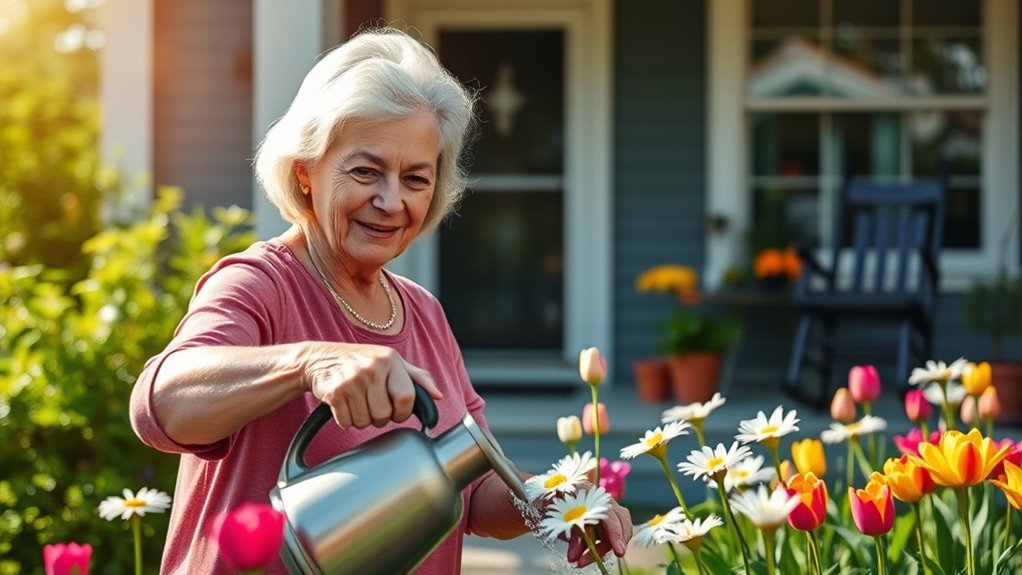
Empowering seniors with assistive technology fosters independence and confidence in daily routines.
But technology alone isn’t enough. Emotional support plays a vital role in encouraging independence. When you show understanding and patience, you reinforce their desire to stay active and involved. Celebrate small victories, like dressing themselves or preparing a meal, because these achievements build their self-esteem. Offer encouragement rather than pity, making sure they feel valued for what they can do. This positive reinforcement helps reduce feelings of frustration or helplessness and boosts their motivation to try new or challenging activities.
It’s essential to listen to their preferences and respect their choices. Instead of immediately stepping in to do everything for them, ask how you can assist and let them take the lead whenever possible. This approach not only preserves their sense of control but also reinforces their decision-making skills. When they encounter difficulties, suggest solutions that involve assistive technology or adaptive techniques. For instance, if they struggle with opening jars, recommend using jar openers or grip-enhancing tools that allow them to succeed on their own.
Creating an environment that encourages independence includes making necessary adaptations to their living space. Clear pathways, accessible shelves, and safety features help them move freely and confidently. Additionally, understanding the importance of contrast ratio can help in selecting appropriate lighting and visual aids to enhance their environment and reduce visual strain. When you combine practical adjustments with emotional support, you help seniors see their potential rather than focus on limitations. Remember, fostering independence is about empowering them to do what they can, while providing the support and encouragement needed to overcome obstacles. By doing so, you help seniors maintain their dignity, stay engaged with life, and experience the satisfaction that comes from doing things themselves. Their sense of independence isn’t just about physical ability—it’s about feeling capable, valued, and in control of their lives.
As an affiliate, we earn on qualifying purchases.
Frequently Asked Questions
How Can Caregivers Motivate Seniors to Stay Independent?
You can motivate seniors to stay independent by practicing respectful communication, which makes them feel valued and understood. Encourage self-efficacy by praising their efforts and reminding them of their abilities. Offer support only when needed, and involve them in decision-making about their daily activities. This approach boosts their confidence, fosters independence, and helps them maintain a sense of control over their lives.
What Safety Measures Ensure Independence Without Risking Falls?
Think of safety measures as the backbone that keeps independence steady. You can do this by installing sturdy grab bars and non-slip mats, making home modifications that prevent falls. Assistive devices like walkers and handrails act as reliable anchors, supporting your loved ones while they move freely. By combining these strategies, you create a safety net that encourages independence without risking falls, allowing seniors to enjoy their daily routines confidently.
How Do I Handle Seniors Refusing Help Despite Needing It?
When seniors refuse help despite needing it, focus on autonomy preservation and trust building. Talk openly about their feelings, listen without judgment, and show respect for their choices. Offer support subtly, emphasizing that assistance is available when they’re ready. By respecting their independence and fostering trust, you help them feel secure, which may encourage them to accept help over time, balancing safety with their desire for autonomy.
What Community Resources Support Elderly Independence?
Ironically, community resources that support elderly independence often focus on technology assistance and social engagement. You can connect seniors with local senior centers, which offer classes on using smartphones or tablets, helping them stay connected. Volunteer programs and transportation services promote social engagement, making it easier for seniors to maintain their independence. These resources empower seniors to do what they can, fostering confidence while respecting their desire for autonomy.
How Does Independence Impact Seniors’ Mental Health?
When you support seniors in maintaining independence, you boost their mental health benefits by fostering a sense of control and purpose. This empowerment enhances their self-esteem, helping them feel valued and capable. As they engage in daily activities, they experience reduced feelings of loneliness and depression. By encouraging independence, you create a positive cycle that promotes emotional well-being and resilience, ultimately improving their overall quality of life.
voice activated assistant for elderly
As an affiliate, we earn on qualifying purchases.
As an affiliate, we earn on qualifying purchases.
Conclusion
By encouraging seniors to do what they can, you empower them to maintain their dignity and confidence. Imagine Mrs. Johnson, who, despite her age, proudly plants flowers in her garden each morning, feeling accomplished and independent. Your support helps seniors like her stay active and engaged, fostering a sense of purpose. Remember, small encouragements and opportunities for independence can make a big difference, allowing them to enjoy life fully and with pride.
adaptive jar openers for seniors
As an affiliate, we earn on qualifying purchases.
As an affiliate, we earn on qualifying purchases.
As an affiliate, we earn on qualifying purchases.
Flea & tick season Picks
flea and tick prevention
As an affiliate, we earn on qualifying purchases.